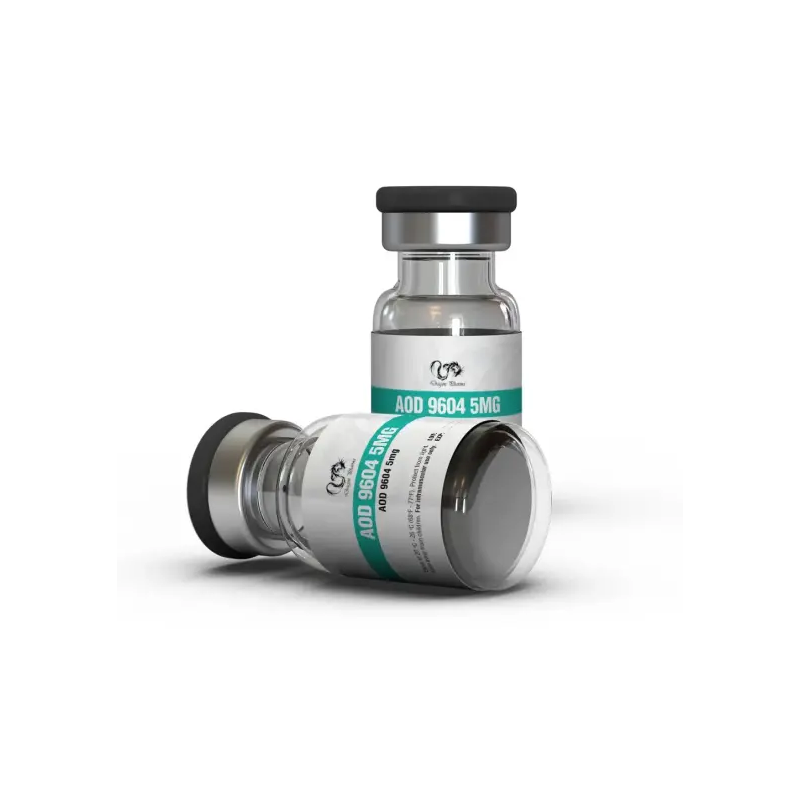
AOD-9604 β GH Fragment 176-191 by Dragon Pharma
AOD-9604 is Dragon Pharma's formulation of the synthetic GH peptide fragment at 5mg per vial β specifically the C-terminal amino acids 176-191 of the human growth hormone molecule, the region responsible for GH's fat-metabolising properties. Unlike full Somatropin (HGH), AOD-9604 does not elevate IGF-1, does not increase insulin resistance, and does not produce the anabolic effects of full GH β it isolates only the lipolytic fragment for targeted fat metabolism.
Also searched as: AOD 9604, GH fragment 176-191, Anti-Obesity Drug 9604, AOD-9604 Dragon Pharma.
What AOD-9604 Means β Name and Origin
The name and origin of AOD-9604 are rarely explained in competitor content:
- AOD stands for Anti-Obesity Drug β reflecting the original research purpose; Monash University in Melbourne, Australia developed AOD-9604 in the 1990s specifically to isolate the fat-metabolising region of growth hormone without its anabolic or diabetogenic effects
- 9604 is the compound reference number from the original Monash University/Metabolic Pharmaceuticals development programme
- The compound reached Phase IIb/III clinical trials for obesity treatment in the early 2000s before development was deprioritised commercially β generating human clinical data in obese subjects that validates its fat loss mechanism
- AOD-9604 received GRAS (Generally Recognised As Safe) designation from the FDA in 2014 for use as a food ingredient β making it one of the few peptides in this space with formal safety recognition from a regulatory body
Why AOD-9604 Does Not Raise IGF-1 β The Fragment Mechanism
This is the most important and most poorly explained aspect of AOD-9604 and the primary reason it differs from full HGH:
- Full growth hormone (191 amino acids) has multiple regions with different biological functions. The N-terminal region (amino acids 1-43 approximately) is responsible for GH's anabolic effects including IGF-1 stimulation, cell growth and insulin resistance
- AOD-9604 is only the C-terminal fragment (amino acids 176-191) β this region mimics the lipolytic activity of GH by stimulating the beta-3 adrenergic receptor in adipose tissue and inhibiting lipogenesis, without engaging the receptor domains required for IGF-1 stimulation
- Consequence: AOD-9604 provides GH-like fat metabolism effects without the IGF-1 elevation that drives cell proliferation, without increased insulin resistance, and without the muscle-building effects of full HGH
- This makes AOD-9604 specifically useful for users who want fat loss support without altering IGF-1 levels β particularly relevant alongside AAS cycles where IGF-1 may already be elevated, or for users who specifically do not want the anabolic effects of full HGH
AOD-9604 vs Full HGH (Somatropin) β The Critical Comparison
| Property |
AOD-9604 (Fragment 176-191) |
Full HGH (Somatropin) |
| IGF-1 elevation |
None β N-terminal region absent |
Significant β 60-70% above baseline |
| Insulin resistance |
Not increased |
Can increase at higher doses |
| Fat metabolism |
Direct lipolytic activity β primary effect |
Fat loss indirect β via IGF-1 and metabolic shift |
| Lean mass building |
None β no anabolic receptor activation |
Significant over extended use |
| Cartilage/connective tissue |
Some preliminary data on repair |
Significant β via IGF-1 and collagen synthesis |
| Water retention |
Minimal |
Moderate β particularly at higher doses |
| Carpal tunnel risk |
Not reported |
Possible at higher doses |
| Half-life |
~30 minutes |
~3-4 hours |
| Cost per vial |
Lower β fragment only |
Higher β full molecule production |
Effects and Benefits
- Targeted lipolysis via beta-3 adrenergic receptor stimulation in adipose tissue
- Inhibition of lipogenesis β reduces formation of new fat deposits
- No IGF-1 elevation β does not drive cell proliferation or anabolic effects
- No insulin resistance β can be used safely alongside carbohydrate-containing nutrition without the glucose dysregulation concern of full HGH at higher doses
- No suppression of natural testosterone, thyroid or HPG axis
- Some preliminary research suggests cartilage repair potential β though this is less established than BPC-157 or TB-500 for this purpose
Dosage and Administration
| Protocol |
Dose |
Timing |
Notes |
| Standard fat loss |
300β500 mcg/day |
Before bed or fasted morning |
Most common protocol |
| Higher dose |
500β1000 mcg/day |
Split into 2 injections, fasted |
Some users report greater effect; evidence limited |